
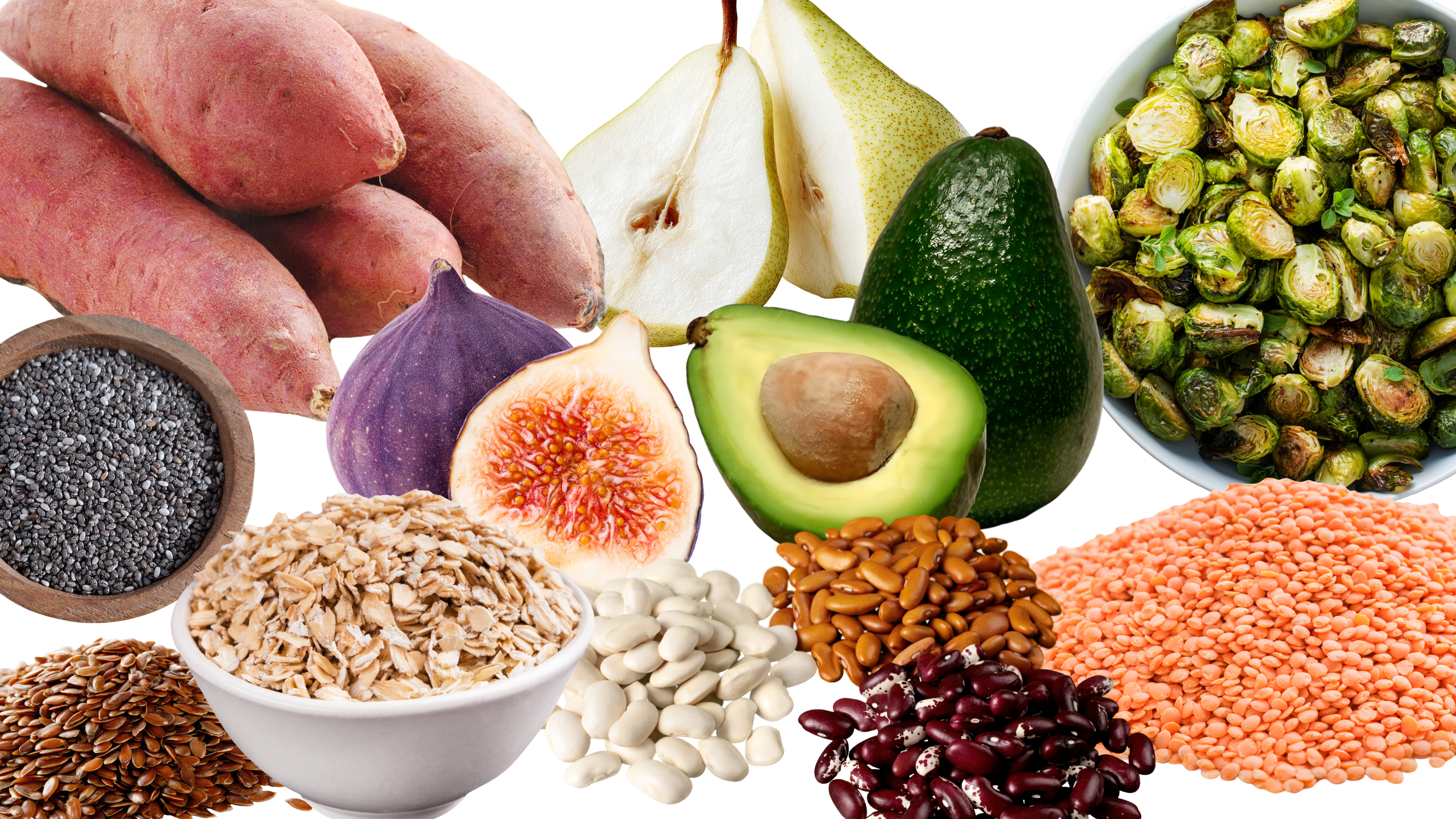
You likely already know how important fiber is for our overall health. Fiber helps to balance blood sugar, supports a healthy gut, and can even lower cholesterol. Still, it’s one of the most overlooked parts of a healthy diet and 95% of Americans don’t get enough of this critical nutrient.
The good news? Increasing your fiber intake doesn’t require a major nutrition overhaul. A few simple and delicious additions to your plate can dramatically boost your fiber intake. In this post, we’re breaking down 10 fiber-rich foods that are easy to work into everyday meals.
10 Fiber-Rich Foods We Recommend
1. Chia Seeds
Chia seeds form a gel when mixed with liquid, which can help promote satiety, support digestion, and feed gut bacteria.
How to eat: Make chia pudding, add to smoothies, or mix into overnight oats.
2. Pears
Pears are rich in insoluble fiber, which helps add bulk to stool and support regular digestion. The skin contains most of the fiber.
How to eat: Eat fresh with the skin, slice into salads, enjoy dried pears, or pair with your favorite plant-based yogurt.
3. Figs
Figs contain both soluble and insoluble fiber, supporting digestion and regularity. Dried figs are more concentrated in fiber and great for easing constipation.
How to eat: Eat fresh or dried, chop into oatmeal, or add to salads.
4. Flax Seeds
Flax seeds are high in soluble fiber, which helps support healthy digestion and stable blood sugar levels. Ground flax seeds are easier for the body to digest than whole seeds.
How to eat: Stir ground flax into oatmeal, yogurt, smoothies, or baked goods.
5. Oats
Oats contain beta-glucan, a soluble fiber linked to heart health and improved cholesterol levels. It also supports satiety.
How to eat: Prepare oatmeal, overnight oats, homemade granola, or blend into smoothies.
6. Beans
Beans provide both soluble and insoluble fiber, supporting gut health, satiety, and blood sugar control.
How to eat: Add to soups, salads, tacos, or mash into spreads and dips.
7. Lentils
Lentils are high in fiber and can be easier to digest than many other legumes. Their fiber supports gut bacteria and steady energy.
How to eat: Use in soups, stews, curries, or as a base for grain bowls.
8. Avocado
Avocados provide a mix of soluble and insoluble fiber along with monounsaturated fats, supporting satiety and digestive health.
How to eat: Spread on toast, add to salads, or blend into dips and smoothies.
9. Sweet Potato
Sweet potatoes contain fiber that supports digestion and helps regulate blood sugar.
How to eat: Bake or roast with the skin on, mash, or add to grain bowls.
10. Brussels Sprouts
Brussels sprouts provide both soluble and insoluble fiber, which support digestive health and regular bowel movements. They also contain compounds that support gut bacteria.
How to eat: Roast with olive oil, add to stir-fries, or shred raw into salads.
Consistency is Key
Boosting your fiber intake doesn’t have to be complicated. By incorporating a few of these foods into your daily meals, you can support your digestion, heart health, and overall well-being, one plate at a time.
Start small, stay consistent, and don’t forget to hydrate, as fiber works best when paired with enough fluids. If you’re looking for more guidance, explore our related posts on the importance of fiber, managing IBS, and improving cholesterol with nutrition.
Get 1:1 Nutrition Support
Nutrition changes don’t have to be dramatic to be effective. They just have to be sustainable. If you’d like individualized nutrition support from a registered dietitian, apply to work with us.